
Crawl Space Dehumidifier Installation in Roanoke, VA
APPALACHIAN FOUNDATION SERVICES
A crawl space dehumidifier is a unit that pulls moisture out of the air under your home and holds the space at a steady, dry humidity level. In Roanoke, VA, where summers are warm and humid, a crawl space can stay damp long after the ground is dry. Appalachian Foundation Services installs and correctly sizes crawl space dehumidifiers to keep humidity in the safe range, protect your floor framing, and stop the musty air that works its way up into the house.
CALL US NOW
(540) 251-4391

Schedule Inspection
Appalachian Foundation Services
Signs Your Crawl Space Is Too Humid
Most homeowners never go under the house, so the first clues show up inside:
- A musty or earthy smell in the rooms above
- Floors that feel damp, cupped, or cooler than they should
- Condensation or “sweating” on ductwork or pipes
- Mold or mildew on stored items, baseboards, or insulation
- Allergy or asthma symptoms that get worse indoors
- Insulation under the home that sags, darkens, or falls down
If the crawl space has a vapor barrier and drainage already, but the air still feels heavy and damp, the missing piece is usually air drying — a dehumidifier.
Why Crawl Space Humidity Is a Problem in Roanoke Homes
Wood framing wants to stay dry. When crawl space air sits above about 60% relative humidity for long stretches, that moisture soaks into joists, beams, and the subfloor. Over time, damp wood invites three expensive problems: wood rot, mold growth, and wood-destroying insects like termites and carpenter ants that are drawn to soft, moist framing. Humid air also makes your HVAC work harder, because damp air is harder to cool. In our area, open foundation vents were once thought to dry a crawl space out — but on a humid Virginia day, those vents often let warm, wet outside air in, where it condenses on cooler surfaces underneath the home. Controlling the air is what actually keeps the space dry.
Where a Dehumidifier Fits in the Bigger Picture
A dehumidifier is the last step, not the only step. If liquid water is getting into your crawl space from the ground or from outside, that has to be handled first with drainage and a moisture barrier — see our foundation and basement waterproofing page. Once the standing water and ground moisture are controlled, a properly sized dehumidifier manages what’s left: the humidity in the air. Used together — sealed ground, controlled water, and dried air — the crawl space finally stays stable. Used alone on a wet crawl space, a dehumidifier just runs constantly and never wins.
How We Size and Install a Crawl Space Dehumidifier
Sizing matters more than brand. A unit that’s too small never catches up; one that’s too large short-cycles and wastes energy. When we inspect your crawl space, we look at:
- The square footage and ceiling height of the space
- How sealed or vented the crawl space currently is
- Existing moisture sources and drainage
- The average humidity load for your specific home
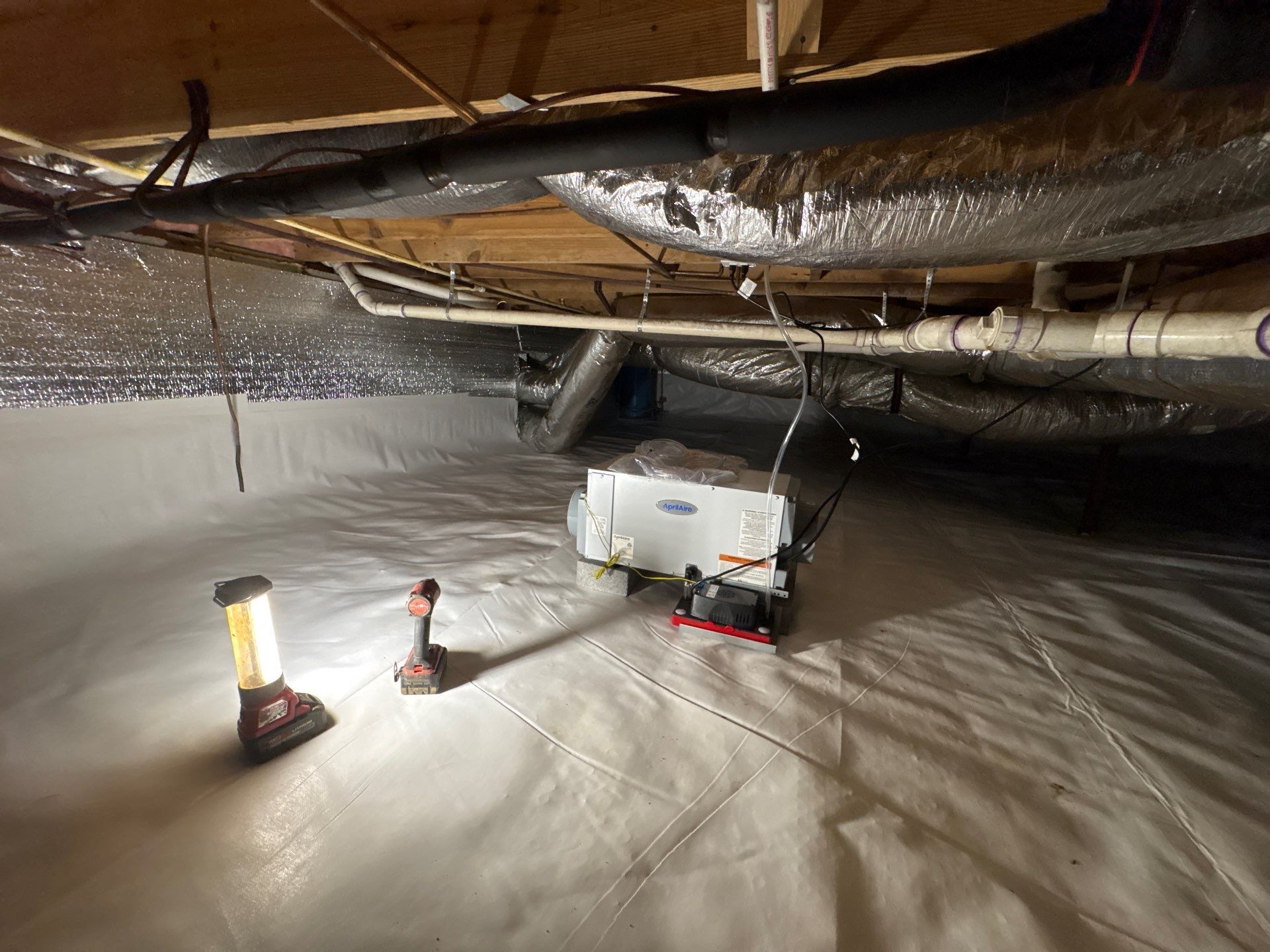
We install a purpose-built crawl space dehumidifier — not a portable room unit — with a self-draining line so it empties on its own without a tank to check. We set it to hold the space in the target range (generally 45-55% relative humidity) and place it for even airflow across the whole crawl space. When it makes sense, we pair it with sealing and vapor-barrier work so the unit isn’t fighting a leaky, vented space.
What a Crawl Space Dehumidifier Addresses
Humidity under a home shows up in a few recognizable ways. A crawl space dehumidifier, used alongside sealing and drainage where needed, targets the airborne moisture behind each of these.
Humid, musty crawl space air
Mold and mildew growth
Damp ground and standing moisture
Insulation and moisture control
A sealed crawl space that still feels damp
Appalachian Foundation Services
What Proper Humidity Control Protects
Keeping crawl space humidity in range does more than clear the musty smell:
- It protects floor joists, beams, and subfloor from rot
- It removes the damp conditions termites and carpenter ants look for
- It slows and prevents mold growth under the home
- It helps your floors feel drier and more stable
- It can lower cooling costs by giving your HVAC drier air to move
If humidity has already caused soft spots or sagging, drying the air is still the right foundation — but the damaged framing itself needs to be addressed. In that case we’d also look at floor joist repair.
Why Roanoke Homeowners Trust Appalachian Foundation Services
Appalachian Foundation Services is a Roanoke, VA structural and foundation specialist serving the Roanoke Valley since 2015, with over a decade of framing and structural experience. We work on everything from modern homes to older balloon-frame, post-and-beam, and log construction across the Roanoke Valley. We don’t treat a damp crawl space as a one-part sale — we inspect the whole moisture picture (water, vapor, and air) and recommend only what your home actually needs. Every job starts with a free crawl space inspection.
Schedule Your Free Crawl Space Inspection
If your crawl space smells musty, your floors feel damp, or you’re fighting mold under the home, the fix usually starts with controlling the air. Schedule a free crawl space inspection and we’ll measure the humidity, find the moisture sources, and tell you honestly what your home needs.
Frequently Asked Questions
Often, yes. A vapor barrier blocks moisture rising from the soil, but it does not remove humidity already in the air. In humid Roanoke summers, a sealed crawl space can still sit above safe humidity levels without a dehumidifier to dry the air.
Aim to keep crawl space relative humidity below 60%, and ideally in the 45-55% range. Above 60% for long periods is where wood rot, mold, and insect problems start.
Not well. Portable room units are undersized for crawl space conditions, have small tanks that must be emptied by hand, and are not built for that environment. We install purpose-built, self-draining crawl space units sized to the space.
In our climate, open vents often let humid outside air in, where it condenses under the home. Sealing the crawl space and controlling the air with a dehumidifier usually keeps it drier than venting. We will assess your specific home during the inspection.
No. A dehumidifier stops the damp conditions that cause damage, but it does not repair framing that has already rotted or weakened. If your floors sag or feel soft, the joists and supports need to be inspected and repaired separately.